


Competence does not exist in a vacuum; no one is simply ‘competent’.
In adventure activities, competence always has a context. Everyone is competent to some extent, in certain situations and at specific tasks.
When managing activities, that context is defined by the job an individual is asked to do.
The key question is:
“Are they competent enough to do this job”?
In the outdoor adventure sector, context includes the activities; the environment in which they are delivered; the client group; the experience of the instructional staff; and the overall management arrangements.
Three areas of competence
It may be helpful to think about three key areas where competence is essential in adventure risk management:
Competence to advise on safety management arrangements
The ability to assess and understand the risks being created by an activity, and to design appropriate and effective control measures to manage these. This includes designing a safety management system that enables the chosen activities to be delivered safely within the environment(s) used and with the staff available.
Competent operational management
The ability to apply and control the designed safety management arrangements on a day-to-day basis. This includes making appropriate go/no go decisions within the agreed operational limits, and correctly deploying instructors based on environmental conditions and the needs of the client group that day.
Competent leaders and instructors
Those delivering activities must be able to deliver safe, appropriate sessions for the groups and conditions they encounter, including dealing with foreseeable emergencies.
The first two areas should always support the third. A well-designed and effective safety management system, applied competently should always result in the six Rs:
The right leader deployed in the right place, at the right time, with the right group, in the right conditions, with the right equipment.
When the system fails, experienced and competent instructors can act as a ‘back stop’ – pointing out problems or refusing to be deployed. Less competent or confident instructors are understandably less likely to do this.
Depending on the size and structure of your organisation these different areas may overlap or be combined. A sole trader delivering activities themselves will require competence in all three areas, while a large multi-centre operation may distribute them across different roles.
Safety management arrangements must work with the people involved
Everyone has limits to their competence so any safety management system must be designed to work with the competence of the people operating within it.
It is important to remember that when key personnel change, the system should be reviewed in the light of the new team’s skills, experience and ability.
For example, an outdoor centre might feel able to deploy summer mountain leader qualified staff in winter conditions because an experienced, Winter Mountaineering and Climbing Instructor (WMCI) qualified manager is making daily go/no go deployment decisions based on their knowledge of the instructors, the conditions, the route and the participants. If the centre no longer has such managers, then this deployment becomes weak and unsupported.
Without sufficiently competent and experienced managers on site, the system needs different operational limits. Perhaps external technical experts providing statements of competence limiting where, and in what conditions, different instructors could be deployed. Both systems can work because both systems are appropriate for the competence of the operational managers and instructors involved.
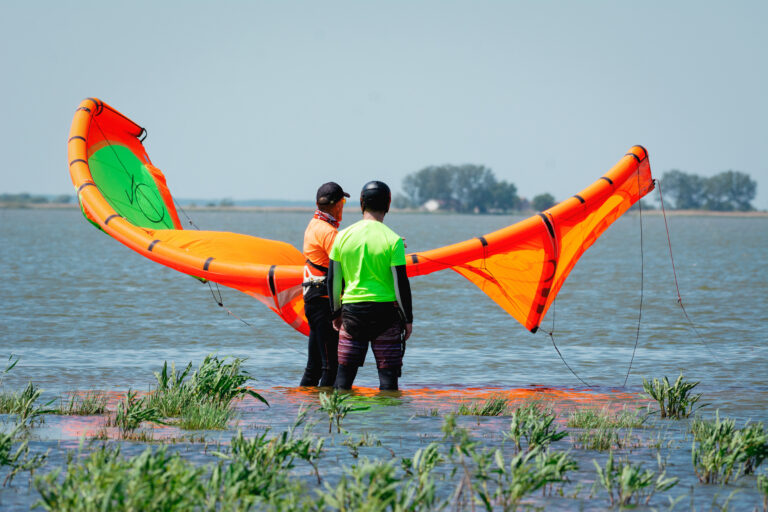
A similar principle applies in the deployment of watersports instructors. The sea -and even some very large lakes – can be a changeable and challenging environment. Sound deployment and delivery often requires knowledge gained from experience and environmental understanding, in addition to technical activity, qualifications, or leadership skills.
Where things can go wrong
Recent near-miss incidents have demonstrated where the safety management system appeared to fail because it didn’t sufficiently take account of the competence of the people involved.
In both cases, the provider had made a suitable and sufficient assessment of the risks and identified appropriate controls, and on paper they appeared to have a workable safety management system. In practice, those systems did not work.
In one case, the operational managers ignored the defined operating limits within the system and tried to deliver activities in conditions beyond those agreed and beyond the competence of the instructors. The instructors lacked the experience or confidence to challenge their deployment.
The system failed to account for the personal characteristics of the operational managers, including the possibility that the set operating limits could be ignored or overridden.
In the other case, an experienced head of centre left and was not replaced. Responsibility for go/no go deployment decisions fell to instructors not experienced or competent enough, and they made a poor decision.
The system had not been reviewed and amended to take account of the change in personnel.
Key questions to consider when reviewing your safety management arrangements:
- Are the people involved in assessing the risks and identifying appropriate controls experienced and competent enough to do this?
- Who applies the system, makes daily go/no go decisions and deploys staff and clients to an activity – are they competent enough?
- Are the instructors competent enough to manage whatever group, environment and conditions they are deployed to?
Final thought
Competence is not just about qualifications, although they can form an important part of the picture.
Being ‘competent enough’ means having an appropriate combination of skills, knowledge, training, experience and personal attributes for the assigned role – whether that is designing a safety management system, implementing and controlling one or delivering an activity session within it.

Scan to read online